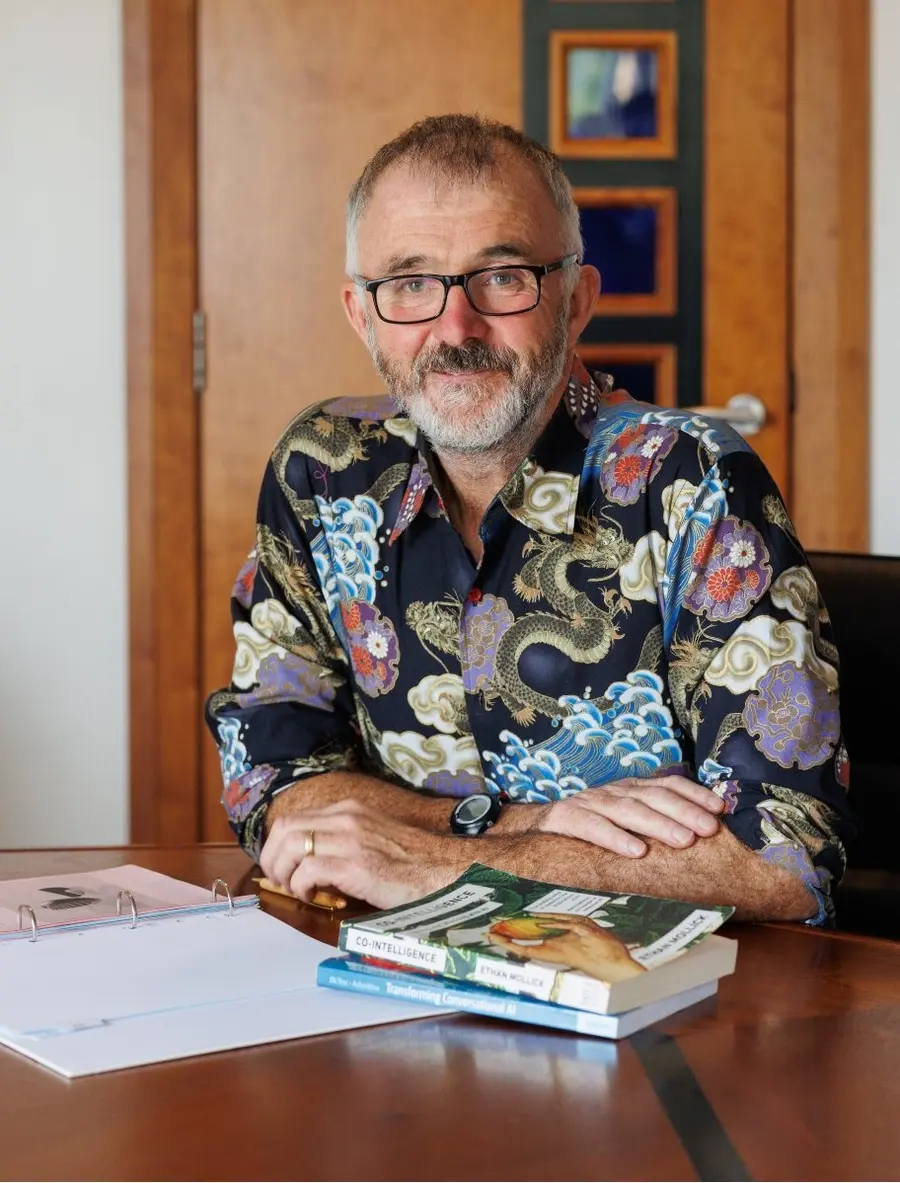


Barry Phillips (CEO) BEM founded Legal Island in 1998. He is a qualified barrister, trainer, coach, and meditator, and a regular speaker here in the UK and Ireland, and abroad.
Barry has completed the Oxford University course “Leading AI Implementation” in June 2026. He has trained hundreds of HR Professionals on how to use GenAI in the workplace and is the author of the book “ChatGPT in HR – A Practical Guide for Employers and HR Professionals”




This week Barry Phillips suggests that we’re all a lot safer in HR than we’re led to believe.
Transcript:
Hello Humans!
And welcome to the weekly podcast that aims to address an important AI development relevant to HR in around five minutes. And what could be more important than the very existence of the HR profession?
If you work in HR, you may have heard the cheerful prediction that artificial intelligence is coming for your job. Recruitment will be automated. Employees will answer their own questions. AI agents will write the policies, arrange the interviews and administer the training. Presumably, they’ll also organise the Christmas party and investigate themselves when it goes wrong.
The conclusion seems obvious: fewer administrative tasks must mean fewer HR professionals.
Except, apparently, it doesn’t.
HR analyst Josh Bersin recently examined US labour-market data from Lightcast. His analysis covered job postings across recruitment, learning and development, compliance, HR technology, consultancy and other HR-related occupations. Over approximately 20 years, HR job postings increased by an average of 1.6% a year. Overall US employment grew by around 0.9% a year.
In other words, demand for HR professionals grew faster than employment generally. But perhaps that is ancient history in AI terms. After all, anything before ChatGPT now feels like it happened shortly after the invention of fire. So, what happened more recently?
According to Bersin’s analysis, HR job postings increased by around 6% annually during the previous two years. Jobs outside HR grew by only half a per cent. During the most recent 12 months, HR postings reportedly rose by 4.7%, compared with just 0.2% across the wider labour market.
That creates a fascinating contradiction. Research suggests AI could remove between 30% and 40% of the tasks currently performed within HR. Yet demand for HR professionals is rising. The explanation is that automating tasks is not the same as eliminating professions.
AI can schedule interviews, produce routine documents and answer predictable questions. It can help employees find policies, generate learning content and navigate HR systems without submitting yet another ticket marked “urgent”.
That should reduce administration. But it also releases HR professionals to tackle the work organisations genuinely struggle with: leadership, culture, retention, reskilling, workforce planning, organisational design and managing change.
And there is no shortage of change. Every organisation adopting AI must decide which jobs will disappear, which will be redesigned, what new skills will be required and how frightened employees can be supported through the transition.
Those are not merely technology questions. They are people questions. That puts HR near the centre of AI transformation, assuming HR is willing to step into that position.
There is also a hard commercial argument. HR represents a relatively small proportion of most organisations’ expenditure. Cutting that cost may produce an attractive line on a spreadsheet, but the saving quickly evaporates if recruitment slows, training deteriorates, managers struggle or an expensive transformation fails.
Saving money by weakening HR can be like removing the brakes to make the car lighter. Technically, you have improved efficiency. Briefly. We should, however, keep some perspective. These are US job-posting figures, not proof that every HR role is safe. Job postings are not the same as actual employment, and administrative positions remain particularly exposed. And as well know, the position in Ireland and the UK is often quite different to what’s happening in HR across the pond
The message is not that HR can relax. It is almost the opposite.
AI will remove parts of HR. It will expose weak processes, unnecessary bureaucracy and work that creates little value. But it can also increase the importance of professionals who understand people, organisations and change.
AI is not coming for the HR profession.
It is coming for the version of HR that refuses to evolve.
Our future will not be secured by defending yesterday’s administration. It will be secured by taking responsibility for tomorrow’s transformation.
So let the machines process the paperwork. HR has a workplace to reinvent.
Until next week. Bye for now!

 Get the Most from Copilot (Level 1): A Practical Guide for HR