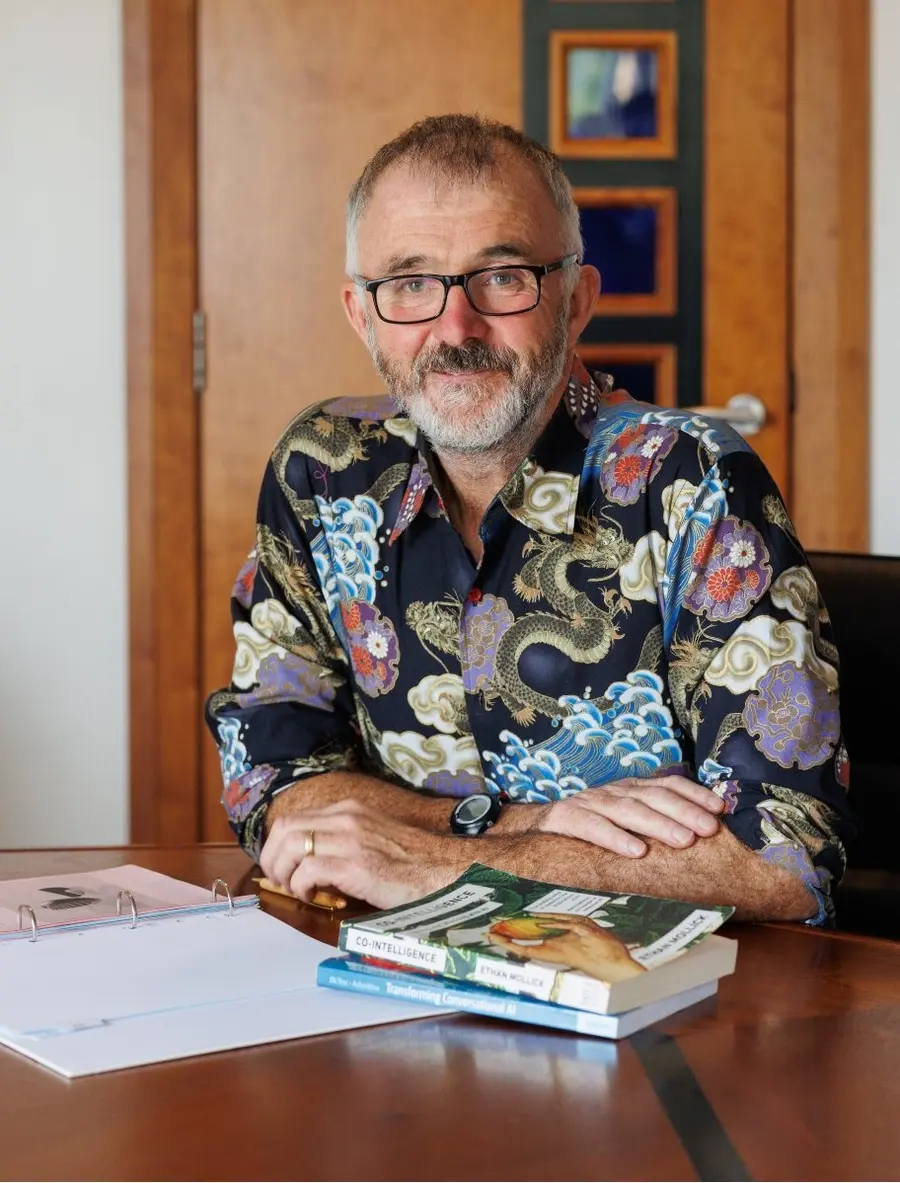

Barry Phillips (CEO) BEM founded Legal Island in 1998. He is a qualified barrister, trainer, coach, and meditator, and a regular speaker here in the UK and Ireland, and abroad.
Barry has completed the Oxford University course “Leading AI Implementation” in June 2026. He has trained hundreds of HR Professionals on how to use GenAI in the workplace and is the author of the book “ChatGPT in HR – A Practical Guide for Employers and HR Professionals”



We're constantly told that AI is transforming work. But here's the uncomfortable truth many organisations are getting it badly wrong. Bolting AI onto broken processes doesn't create transformation—it creates expensive chaos. Let me explain why.
Hello Humans!
And welcome to the weekly podcast that aims to summarise in five minutes or less an important AI development relevant to HR. My name is Barry Phillips
Recently, McKinsey published a report called "Agents, Robots, and Us: Skill Partnerships in the Age of AI." Their conclusion? The future of work isn't about humans versus machines—it's about partnership between people, AI agents, and robots working together.
But here's the standout insight that should make every leader pause: value doesn't come from simply automating tasks. It comes from fundamentally redesigning workflows around three things—human judgment, human accountability, and machine capability.
The report includes something called the Skills Change Index, which provides a helpful lens for understanding which capabilities will matter most. But honestly, that's not the most important question we should be asking.
The real leadership question is this: are organisations actually redesigning how work gets done, or are they just layering AI onto existing structures?
Think about it. If you attach AI to a dated process, you haven't created innovation—you've automated dysfunction. If you bolt AI onto a broken workflow, you haven't solved the problem—you've amplified it. The result isn't a magical fix. It's an even bigger no-go area that does even greater harm to productivity levels.
I see this happening everywhere. Companies rushing to implement AI tools without first asking whether their underlying processes make sense. It's like putting a Formula One engine into a car with square wheels—impressive technology, completely wasted.
So, what does real leadership look like in this moment?
As agents and robots reshape work and the economy, leadership becomes absolutely crucial. This isn't about technology implementation—it's about stewarding a fundamental transition in how humans create value.
Leaders must do three things, and none of them are easy.
First, invest genuinely in reskilling. Not token training programmes, but deep capability building that prepares people for partnership with AI, not replacement by it.
Second, redesign roles and workflows from the ground up. This means having the courage to ask: if we were starting from scratch today, knowing what AI can do, how would we actually structure this work? It's a harder question than it sounds, because it requires confronting how much of what we do is simply legacy thinking.
And third, build trust in human–machine partnership models. People need to see that this isn't about managing them out—it's about amplifying what makes them irreplaceable: judgment, creativity, accountability, and human connection.
The organisations that will thrive aren't the ones deploying the most AI. They're the ones brave enough to redesign work itself. The technology is ready. The question is: is your leadership?
Until next week, bye for now.
 Get the Most from Copilot (Level 1): A Practical Guide for HR