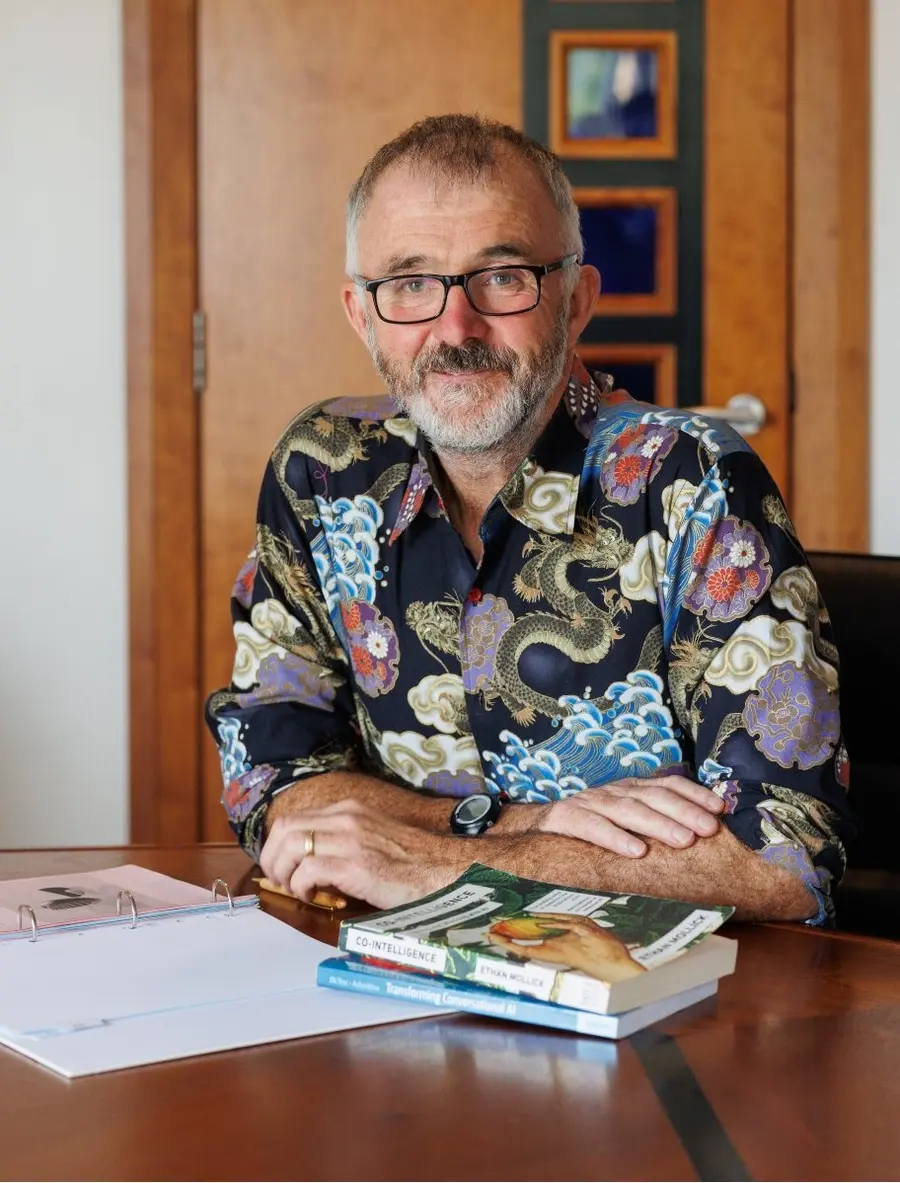

Barry Phillips (CEO) BEM founded Legal Island in 1998. He is a qualified barrister, trainer, coach, and meditator, and a regular speaker here in the UK and Ireland, and abroad.
Barry has completed the Oxford University course “Leading AI Implementation” in June 2026. He has trained hundreds of HR Professionals on how to use GenAI in the workplace and is the author of the book “ChatGPT in HR – A Practical Guide for Employers and HR Professionals”



This week Barry Phillips asks a difficult question and suspects he already knows the answer…
Transcript:
Hello Humans! And welcome to the podcast that aims to summarise in around five minutes each week a key AI for HR development. My name is Barry Phillips.
Today’s question is simple, slightly uncomfortable, and possibly overdue: is your organisation AI aware, or AI feral?
By “AI aware”, I mean an organisation that has at least a basic grip on what AI tools are being used, by whom, for what purpose, with what data, under what rules, and with what risks.
By “AI feral”, I mean something rather different. I mean AI use that has escaped into the wild. Employees using free tools they found online. Managers pasting performance issues into chatbots. HR teams experimenting with recruitment prompts. Colleagues summarising grievances, policies, contracts, absence notes or redundancy matrices without really knowing where that data goes, how it is processed, whether it is retained, or whether anyone has properly assessed the risks.
And here’s the blunt truth: very few organisations would survive an in-depth AI audit today. But the more interesting question is this: how many would even dare to self-assess against basic AI standards?
Could they show, in a clear and credible way, that they have baseline controls across the essentials: AI use, people, governance, data, employment risk and supplier oversight?
My guess? Very few. And even that may be generous.
Real governance means knowing what is happening in practice. It means understanding the tools staff are actually using, not the tools leadership imagines they are using. It means asking whether employees have been trained. It means checking whether managers understand discrimination risk, confidentiality, data protection, intellectual property, bias, accuracy, transparency and accountability.
And it means facing the awkward possibility that your most enthusiastic AI users may also be your biggest compliance risks.
At the very least, an organisation should know which AI tools are approved, which are banned, what data must never be entered, who is accountable, how staff are trained, how suppliers are checked, how human oversight works, and how employment decisions influenced by AI are reviewed.
That is not bureaucracy. That is basic hygiene.
Because when AI goes wrong in the workplace, it will not go wrong in the abstract. It will go wrong in recruitment. In performance management. In redundancy selection. In grievance handling. In absence management. In equality issues. In employee monitoring. In the very places where HR risk already lives and occasionally bites.
So here is my closing challenge for all listeners
If a regulator, tribunal, employee representative, journalist or board member asked you tomorrow, “Show me how your organisation controls AI use in HR”, would you have an answer? Not a vibe. Not a hope. Not a policy someone once mentioned in a Teams chat. An actual answer.
Because the organisations that thrive with AI will not be the ones that merely use it fastest. They will be the ones that use it deliberately, lawfully, transparently and intelligently. The future will not belong to the AI feral. It will belong to the AI aware. And the gap between those two groups is already opening.
The only real question is this: on which side of that gap is your organisation standing right now?
Until next week,
Bye for now.
 Get the Most from Copilot (Level 1): A Practical Guide for HR